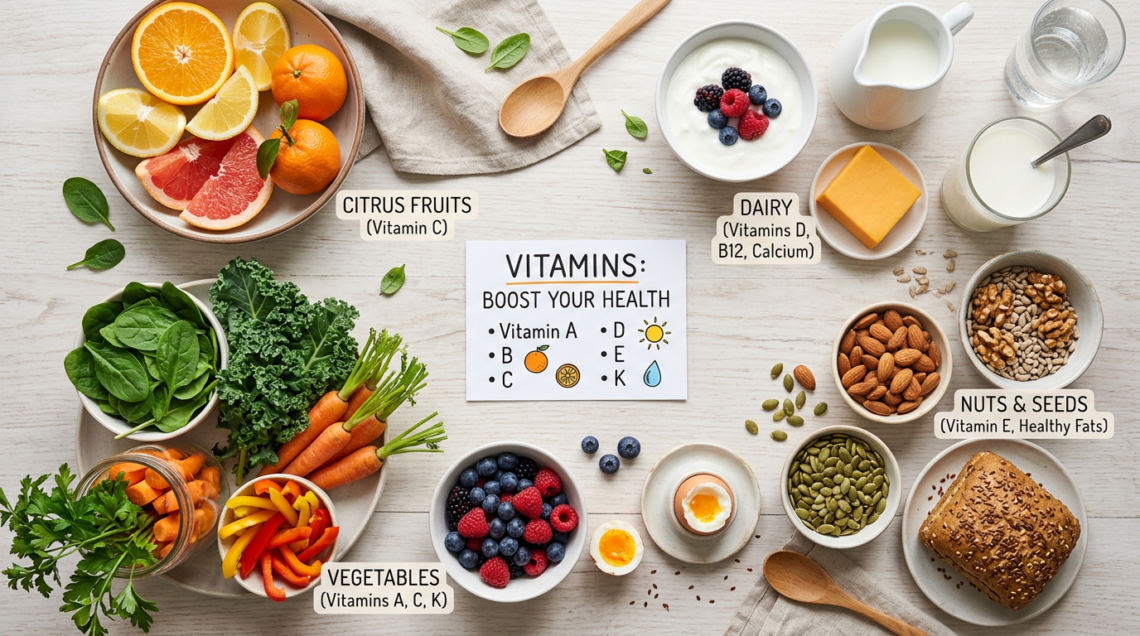
Vitamins are nutrients required by the body in small amounts. Even though the quantity needed is low, their role in body function is important. Vitamins support chemical processes, organ function, and overall stability of the body.
The body cannot produce most vitamins on its own. They must be obtained through food. Without regular intake, deficiencies can develop over time, which can affect health and performance.
Vitamins are divided into two main categories: fat-soluble vitamins and water-soluble vitamins.
Fat-soluble vitamins include vitamin A, vitamin D, vitamin E, and vitamin K. These vitamins are stored in body fat and used when needed. Because they are stored, excessive intake can lead to buildup in the body.
Water-soluble vitamins include vitamin C and the B-complex group. These vitamins are not stored in large amounts. They must be consumed regularly through diet because excess amounts are removed through urine.
Vitamin A supports vision and skin function. It also plays a role in immune system activity. Foods such as carrots, leafy vegetables, and dairy products contain vitamin A.
Vitamin D supports bone health. It helps the body absorb calcium and maintain bone strength. It is obtained from sunlight exposure and certain foods such as fish and fortified products.
Vitamin E supports cell protection. It helps protect cells from damage caused by internal and external factors. Nuts, seeds, and plant oils are common sources.
Vitamin K supports blood function. It helps in the process of blood clotting and supports bone health. Leafy green vegetables are a major source.
Vitamin C supports immune function and tissue repair. It also helps in the absorption of iron from food. Fruits such as oranges, lemons, and other citrus fruits contain vitamin C.
The B-complex group includes several vitamins such as B1, B2, B3, B6, B9, and B12. These vitamins support energy production and brain function. They help convert food into usable energy.
A lack of vitamins can lead to deficiency conditions. These conditions affect different parts of the body depending on the vitamin that is missing. For example, low vitamin D can affect bones, while low vitamin C can affect immunity.
Vitamin intake should come primarily from food. Whole foods provide a natural balance of nutrients that work together. Fruits, vegetables, grains, and animal products are common sources.
Cooking methods can affect vitamin content. Some vitamins are sensitive to heat and can be reduced during overcooking. Light cooking methods help preserve nutrients.
Balanced intake is important. Excess intake of certain vitamins, especially fat-soluble ones, can cause problems. The body does not always remove excess amounts of these vitamins easily.
Vitamin supplements are sometimes used when diet is not sufficient. However, supplements should not replace natural food sources unless required.
Vitamin absorption depends on overall diet. Some vitamins require fats for absorption, while others are absorbed through water-based processes. A balanced diet supports proper absorption.
Lifestyle also affects vitamin levels. Limited sunlight exposure can reduce vitamin D levels. Poor diet choices can reduce overall vitamin intake.
Stress and illness can increase vitamin requirements. During these times, the body may need more nutrients for recovery and function.
Vitamins also play a role in mental function. Certain vitamins support brain activity, focus, and mood regulation. A balanced intake supports mental stability.
Growth and development depend on vitamins. They support cell division, tissue repair, and bone formation. This is especially important during development stages.
Energy production is linked to vitamins. The body uses B vitamins to convert food into energy. Without them, energy levels may decrease even if food intake is sufficient.
Skin, hair, and nail health are also influenced by vitamins. Proper intake supports normal structure and function.
Deficiency signs depend on the vitamin involved. Fatigue, weakness, poor immunity, and slow recovery can be indicators of low vitamin levels.
Long-term imbalance in vitamin intake can affect overall health. Regular and balanced consumption reduces this risk.
Food variety is the key to vitamin intake. No single food contains all vitamins. A mix of food groups ensures complete coverage.
In summary, vitamins are essential nutrients required for body function, energy production, immunity, and overall stability. They must be obtained through a balanced diet and consistent food intake.